Reading

Reading

Books help me examine systems from angles that technical work alone cannot provide. I read across technology, organizations, psychology, memoir, creativity, and fiction—looking for ideas that sharpen how I understand complexity, leadership, people, and change. Some give language to patterns I have already seen; others challenge the assumptions behind how I work.

Ideas in Practice

Books I Return To

These books most directly shape how I frame problems, improve delivery systems, and work with people through difficult change.

Complexity and Consequence

Systems Under Pressure

Technology, organizations, and incentives form one system. These books sharpened how I think about hidden coupling, failure, resilience, and the limits of control.

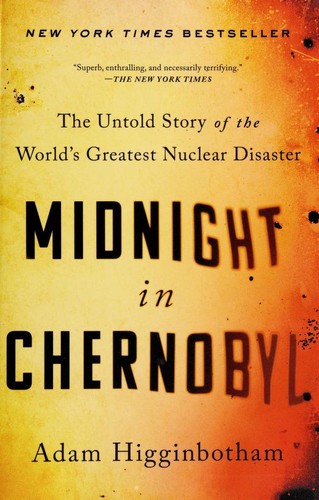
Cover of Midnight in Chernobyl: The Untold Story of the World’s Greatest Nuclear Disaster

Midnight in Chernobyl: The Untold Story of the World’s Greatest Nuclear Disaster

Adam Higginbotham

System FailureGovernanceOperational Risk

Chernobyl is a severe reminder that catastrophic failure is rarely a single technical mistake. Incentives, secrecy, weak feedback, normalized risk, and constrained decision-making can compound until a system has no margin left. It strengthened my conviction that governance must make bad news easier to surface, not easier to hide.

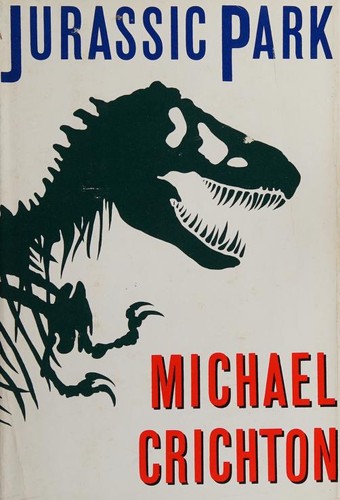
Cover of Jurassic Park

Jurassic Park

Michael Crichton

Complex SystemsObservabilityControl

I return to this as a story about the gap between a designed system and a living one. Complexity, hidden assumptions, and misleading metrics defeat the illusion of control. Reliability begins with humility, meaningful observability, and plans that assume the unexpected will happen.

Cover of Project Hail Mary

Project Hail Mary

Andy Weir

Problem SolvingExperimentationCollaboration

The appeal for me is not just technical ingenuity; it is disciplined problem-solving under radical uncertainty. Progress comes through observation, small experiments, fast feedback, and collaboration across very different mental models—a useful pattern for transformation work at any scale.

Cover of The Order of Time

The Order of Time

Carlo Rovelli

Mental ModelsUncertaintyPerspective

This book is a useful check on certainty. Even concepts that feel fundamental can depend on scale, context, and the observer. It reminds me to hold architectural models lightly: they are tools for reasoning about reality, not reality itself.

Leadership Beyond Process

People, Judgment, and Perspective

Durable change depends on trust, empathy, clear communication, and the willingness to revise a strongly held view.

Cover of Daring Greatly

Daring Greatly

Brené Brown

CourageTrustLeadership

It changed how I think about credibility in leadership. Trust is not built by performing certainty; it grows when leaders can name risk, admit what is not known, invite challenge, and still take responsibility for moving the work forward.

Cover of Flowers for Algernon

Flowers for Algernon

Daniel Keyes

EmpathyIntelligenceDignity

This story stays with me because it separates intelligence from wisdom, belonging, and human worth. It is a reminder that expertise can create distance unless it is paired with empathy—and that people affected by a system should never be reduced to inputs or outcomes.

Cover of The Giver

The Giver

Lois Lowry

ConformityMemoryChoice

The book made me more attentive to what organizations trade away in pursuit of uniformity and control. Standards create leverage, but when they suppress memory, judgment, or dissent, they also hide risk. Good governance preserves room for context and responsible challenge.

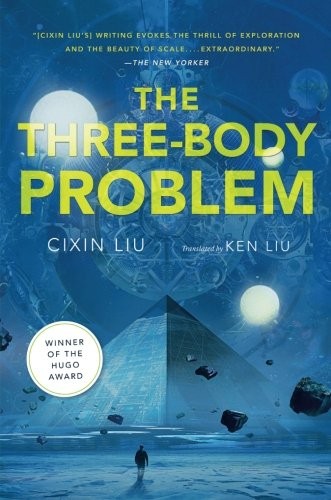
Cover of The Three-Body Problem

The Three-Body Problem

Cixin Liu, translated by Ken Liu

UncertaintyLong-Term ThinkingWorldviews

It expanded the time horizon I bring to consequential decisions. When information is incomplete and different groups reason from incompatible worldviews, the best response is not false certainty but clearer assumptions, reversible steps, and attention to second-order effects.